
Krakow places strong emphasis on green spaces, with 36% of its area covered by trees and 20% by grasslands as part of its sustainable development policy. The city offers more than 50 parks, including the Planty Ring around the Old Town and the Błonia meadow, as well as over 320 km of cycling paths connecting green areas and the Vistula Boulevards.
Visitors can enjoy the restored Wawel Royal Gardens, climb historic mounds for panoramic views, or relax by water reservoirs such as Zakrzówek, a turquoise lake turned into a safe swimming area. Together, these natural treasures make Kraków a vibrant and eco friendly city to explore.
Krakow’s food scene offers much to explore alongside its historic streets and landmarks. Over the years, the Krakow Restaurants Campaign has highlighted nearly 150 recommended venues, offering a useful guide to the city’s culinary landscape.
Regional Polish cuisine remains central to many menus, shaped by rustic traditions and comforting flavours such as pierogi, dark breads and rich sauces. Classic dishes include żurek, a sour rye soup, bigos, a slow-cooked hunter’s stew, and oscypek, a smoked sheep’s cheese from the Tatra Mountains.
Restaurants such as Pod Baranem and Jarema bring refined or regional interpretations, while Wierzynek ties its menus and décor to Krakow’s history. At Miód Malina, mushrooms and beef tenderloin feature prominently in dishes that balance local character with wider appeal.
Krakow’s historic character is reflected in the Old Town, encircled by the Planty park on the site of former ramparts. Townhouses, palaces, and churches line the Royal Route from St. Florian’s Gate and the Barbican to the castle.
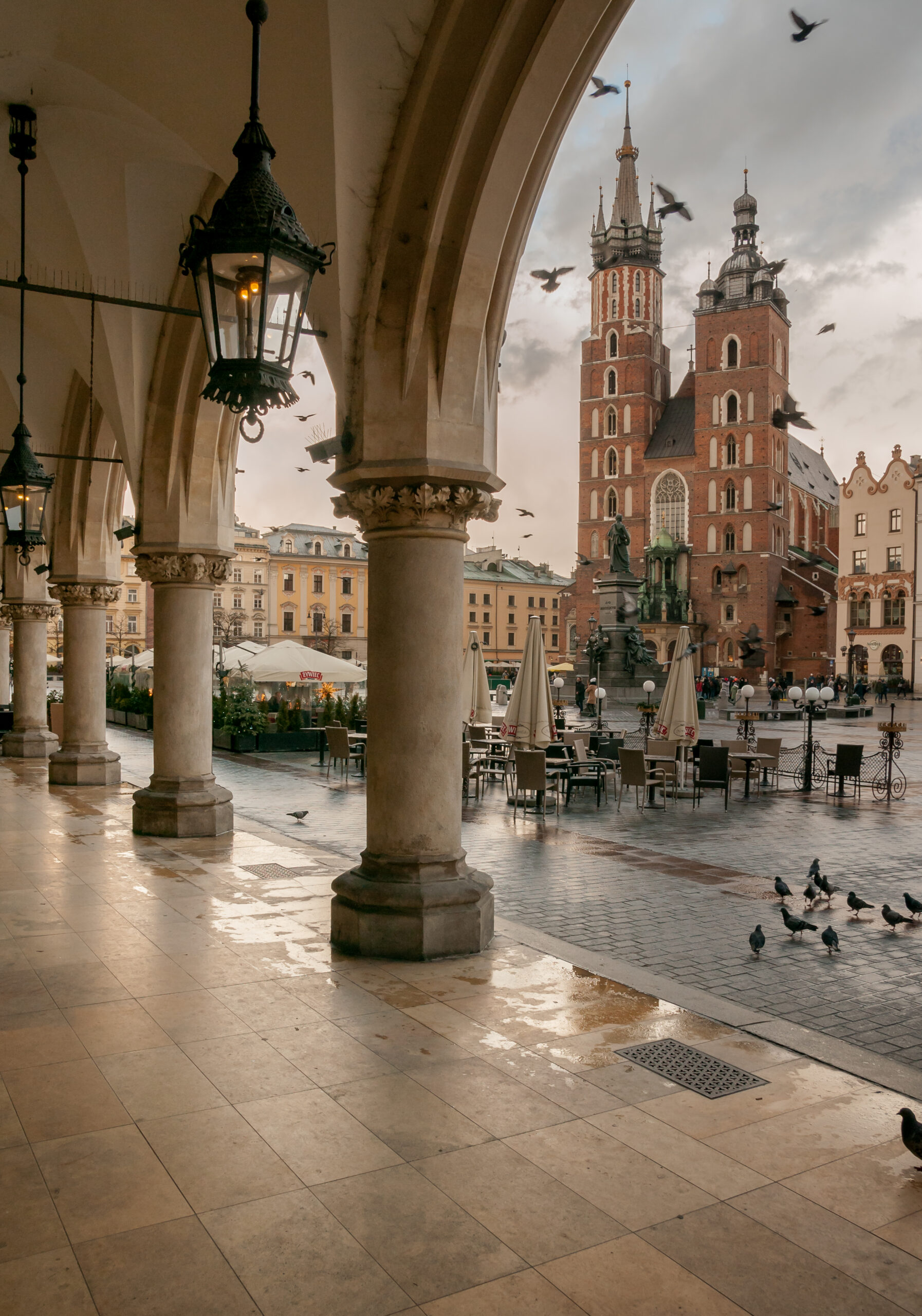
At its heart lies the Main Square, established in the 13th century, the largest medieval market in Europe, marked by the Renaissance Cloth Hall where trade has flourished for centuries. On its western end stands St. Mary’s Basilica, renowned for the hourly bugle call from its tower and the restored altarpiece by Veit Stoss, a masterpiece of medieval art.
Since its foundation, the square has been a central stage for Krakow’s social and political life and the backdrop to significant historical events.
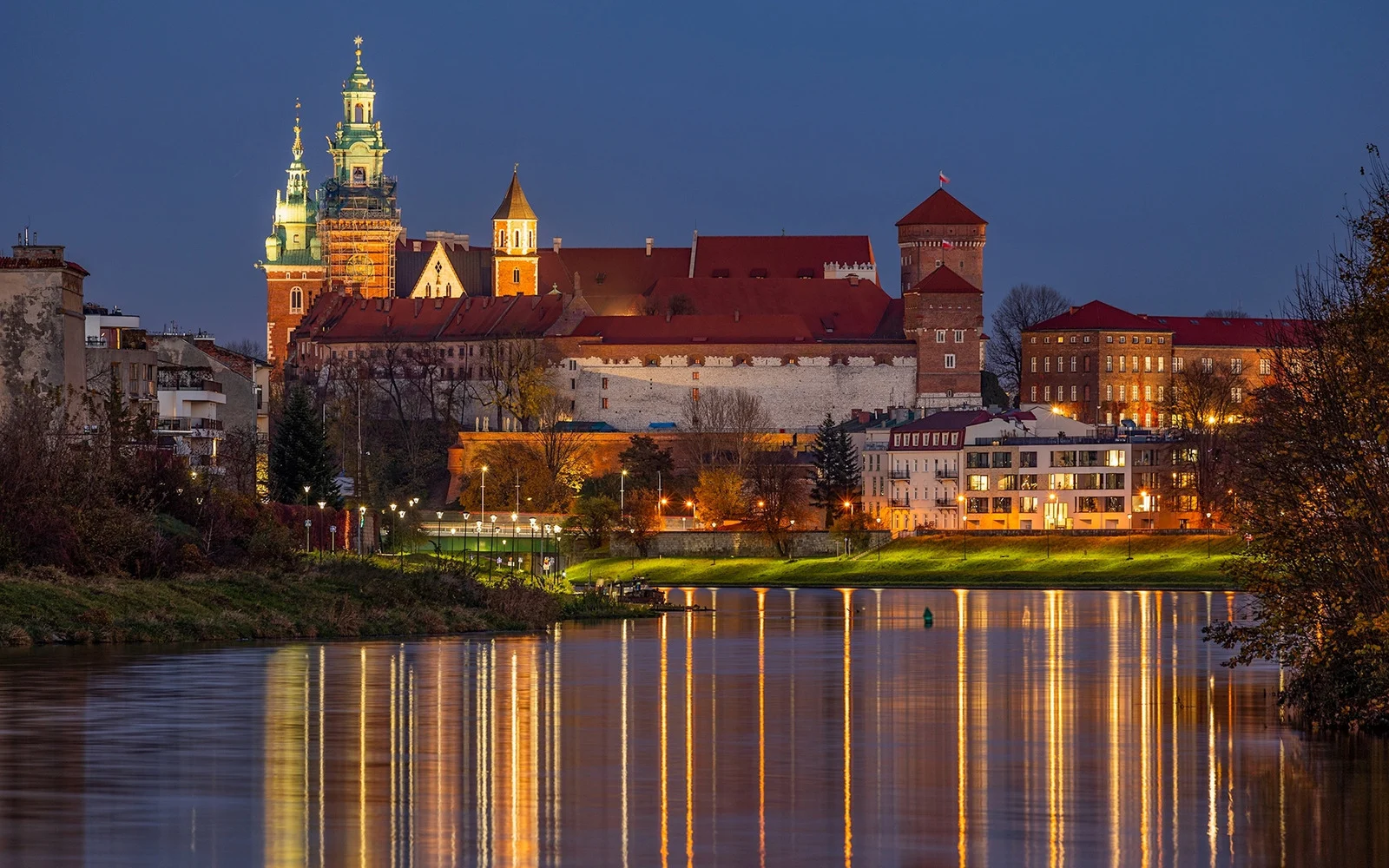
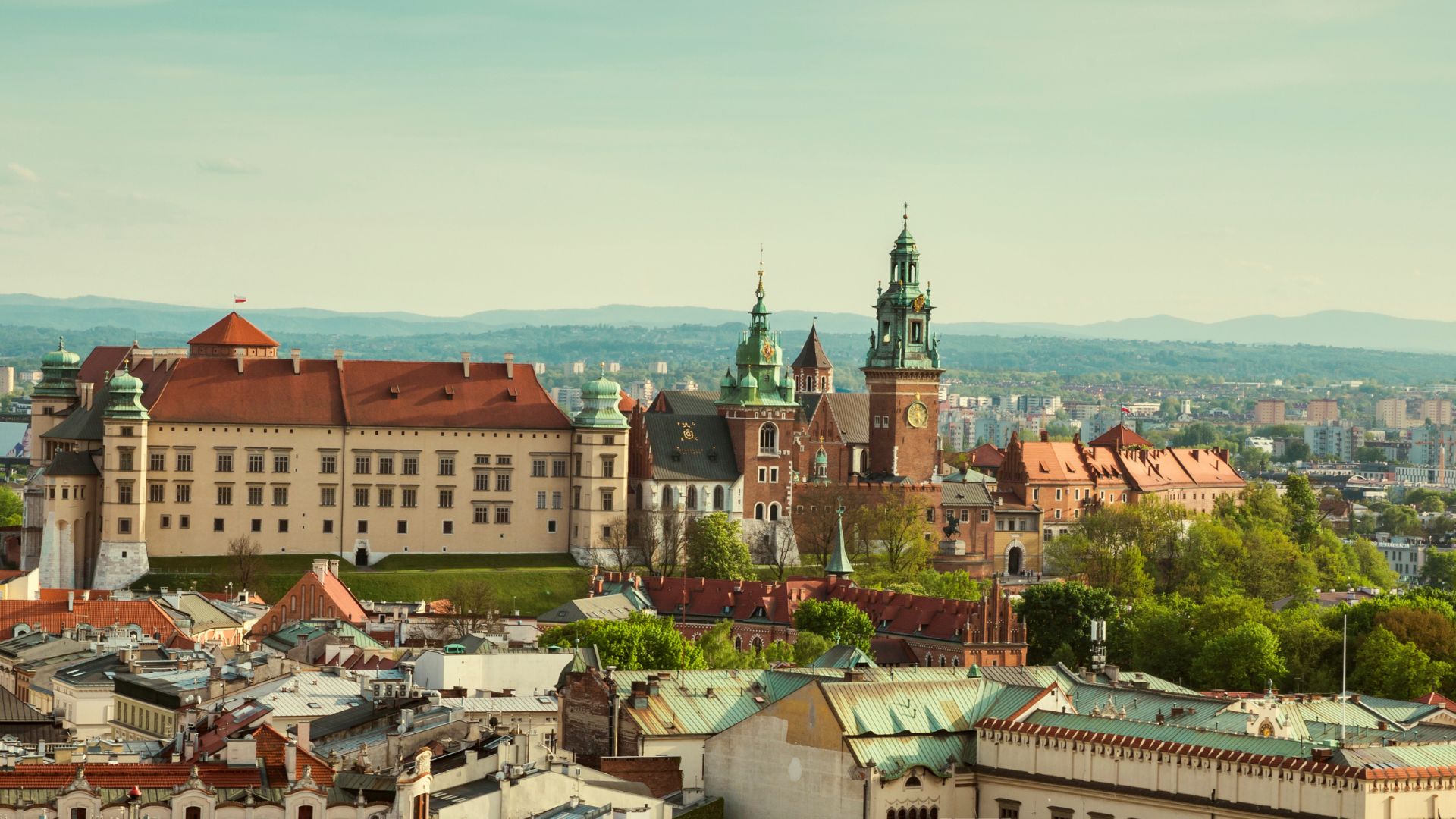
Wawel Hill, reached through the historic Kanonicza Street, is one of Krakow’s most iconic sites, combining centuries‑old authenticity with careful modern restoration. Within the castle, whose origins date back to the 14th century, visitors can explore royal chambers, collections of art and Flemish tapestries, as well as archaeological evidence of Christianity’s long presence in Poland. The cathedral, with its royal tombs and the famous Sigismund Bell cast in 1520, adds to the site’s significance.
Even a brief visit allows you to admire the arcaded courtyard, the castle walls, and views over the Vistula River, while nearby landmarks include the ICE Krakow Congress Centre and the Manggha Museum of Japanese art. Outside, the Wawel Dragon statue and cave are popular with families, and each June the area hosts St John’s Fair, a lively open‑air event.
While all the museums are worth a visit, the MOCAK Museum of Contemporary Art, a pearl of modern architecture, the Museum of Krakow and the Rynek Underground, located just under the Main Square, are particularly worth mentioning. Don't miss Oskar Schindler's Factory, the collection of Polish art in the Main Building of the National Museum in Krakow and the classic Gallery of 19th Century Polish Art in the Cloth Hall, the Polish Aviation Museum with its collection of more than 250 airplanes, gliders and helicopters, the original Manggha Museum of Japanese Art and Technology, and Leonardo da Vinci's famous masterpiece "Lady with an Ermine" in the Princes Czartoryski Museum.
Krakow also offers cultural gems such as the Ethnographic Museum, showcasing traditional Polish folk art and crafts, and the Archaeological Museum, with treasures from prehistoric times and ancient Egypt. The Collegium Maius, part of Jagiellonian University founded in the 14th century, houses fascinating scientific instruments and memorabilia linked to Copernicus.
Krakow and the Małopolska region offer a wide range of leisure opportunities, from historic parks such as the Planty, Jordan Park and the Błonia meadow, to natural sites like the Zakrzówek Lagoon and the Wolski Forest.
The city invests heavily in sports infrastructure, with modern stadiums, swimming pools, kayak routes, and Poland’s largest indoor Aqua Park. Swoszowice spa provides mineral waters and outdoor facilities, while winter sports are available on nearby Carpathian slopes.
Cycling is especially well supported, with extensive urban bike paths, rental systems, and long distance routes such as the Carpathian Cycle Route and the Trail of the Eagles’ Nests, connecting Krakow with surrounding forests, landmarks, and even international trails.
Krakow is known for its dense network of underground pubs and clubs, giving the city a lively nightlife, especially on weekends.
Venues range from student clubs hosting major concerts to alternative spaces like Fabryka or Alchemia, which also carry strong jazz traditions dating back before World War II. Cabaret has a long history here too, with Piwnica Pod Baranami and Rotunda among the most notable. Beyond music, many clubs host cultural activities such as exhibitions, film screenings, and literary events.
Club life also extends to the Vistula River, with Krakow Beach and the barge Alrina offering concerts and gatherings. Sports bars and venues like Stara Zajezdnia, located in a UNESCO protected building, add to the city’s diverse leisure options.
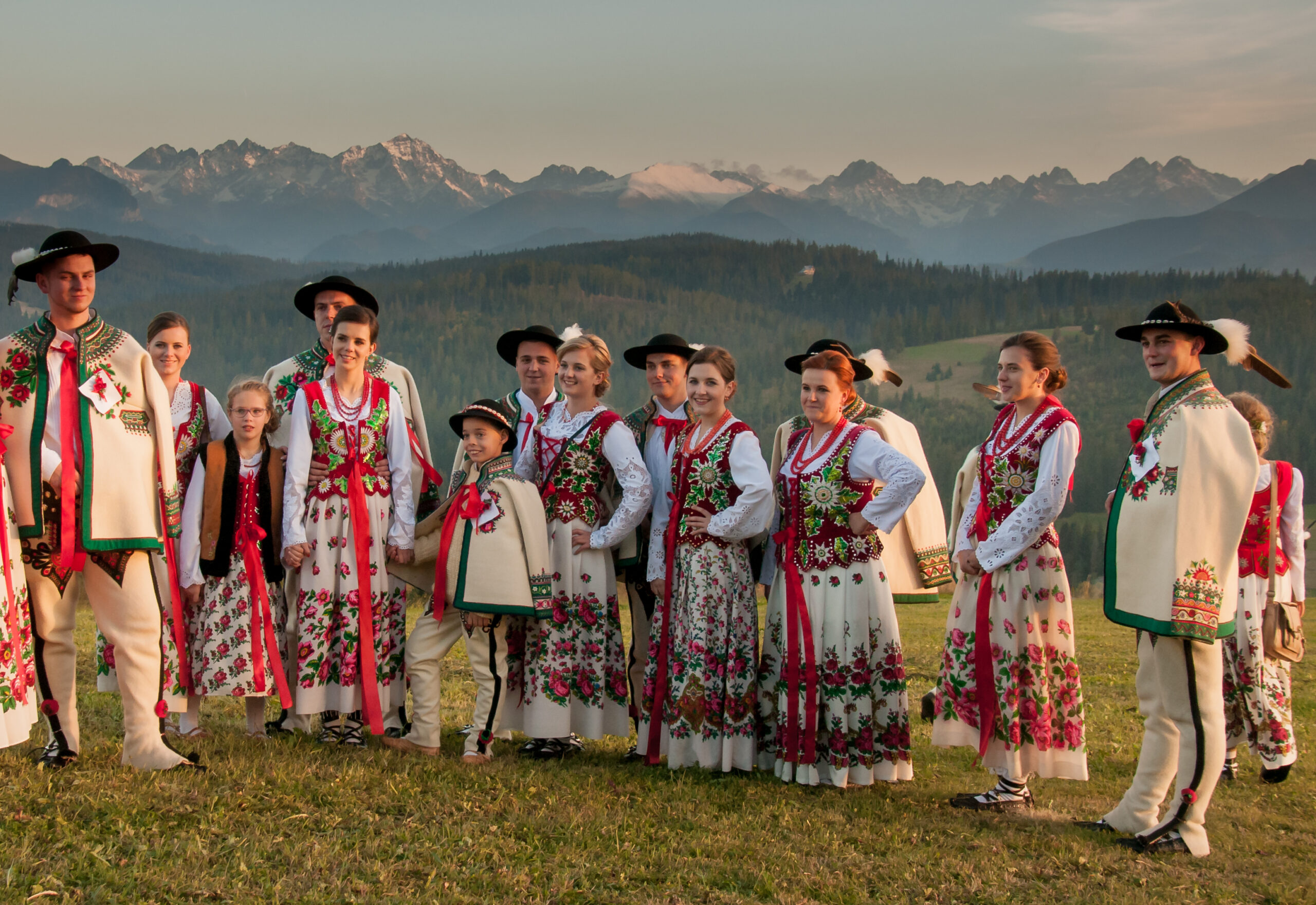
Krakow hosts a rich variety of traditions and cultural events, from historic processions and fairs to the famous Lajkonik parade.
Today the city organises nearly 80 festivals, ranging from short two day celebrations to long events lasting up to two months. Some of its oldest festivals, such as the Kraków Film Festival, have been running for more than 60 years, while others were created after Kraków became European City of Culture in 2000, including the Beethoven Easter Festival and Sacrum Profanum. Altogether, these events reflect the city’s strong cultural ties with its neighborhoods, the wider region, and Europe as a whole.
We would like to thank our Supporter, the Krakow Convention Bureau. Watch this short video to learn more about the city of Krakow and their work.